A rattling canopy or trailer door is one of the most common issues people run into after months of driving on rough roads, job sites or corrugated tracks. What starts as a small vibration can quickly turn into loose hardware, dust getting in, and doors that don’t sit right anymore.
Most of the time, it’s not one single fault. It’s a combination of movement, wear and poor sealing. The good news is it’s a straightforward fix once you know what to look for.
Start by checking the key points of the system. Hinges should hold alignment without play, fasteners need to pull the door in tight, and seals should cushion and close any gaps. If any one of these isn’t doing its job, movement builds and the rattle starts.
Adding or replacing pinchweld and rubber seals helps absorb vibration and stop metal on metal contact. Over centre fasteners apply tension to keep panels firmly shut, while quality hinges maintain alignment over time. Gas struts can also help by controlling movement and preventing doors from slamming.
When everything works together, the result is a door that closes clean, stays tight and keeps dust out, even on rough terrain.
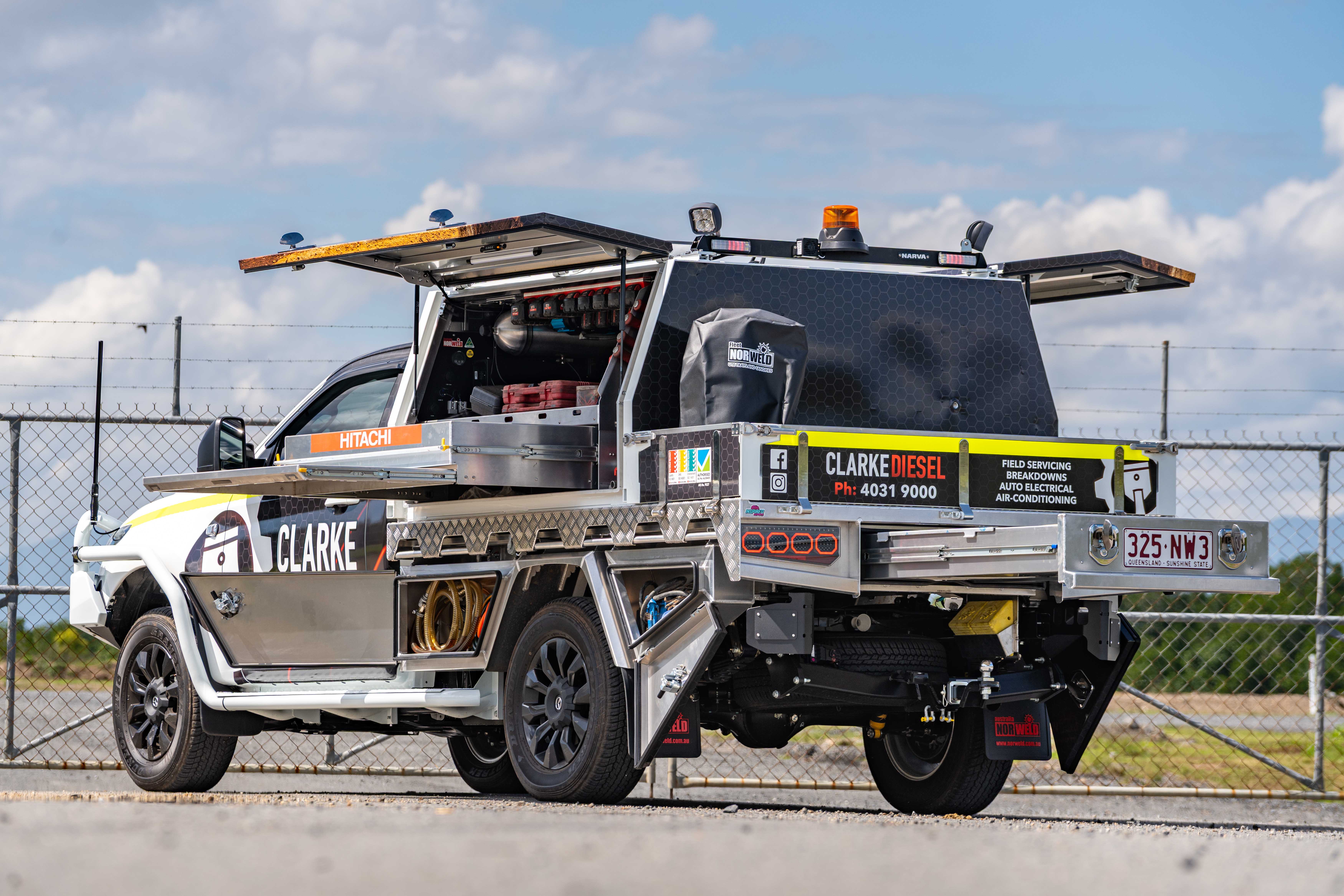 Image courtesy of Norweld
How to choose the right products to stop the rattle in your canopy or trailer door
Here’s a simple way to think about your choice:
Gas Struts
Gas struts are a key component of a canopy or trailer door build and should be selected based on the weight and size of your door. A strut that’s too weak won’t hold, and one that’s too strong can cause stress on the hinges. The right gas strut holds a door well and still allows for Using a gas strut calculator helps you get the right force and positioning for a smooth, controlled open and close. If you're not sure what gas strut is right, give our Gas Strut Calculator a go.
Hinges
If your door is sagging or shifting, your hinges are likely the culprit. Look for hinges with heavy-duty construction and corrosion resistant materials like zinc plating or 316 stainless steel. Hinges also need to suit the door size, weight and frequency of use in your installation. Hinges that maintain alignment over time and reduce play are a good bet, especially on canopies exposed to vibration and rough conditions.
Rubber Seal & Pinchweld
A good seal is critical for absorbing vibration and preventing metal on metal contact. The right profile should create a tight seal without over compressing, helping keep dust out and reducing noise. Overcompression can cause a seal to deteriorate faster than it should. Check your selected profile for the optimal compression for your build.
Locks & Over Centre Fasteners
Locks, latches and over centre fasteners are what pull everything together - the components eliminate movement. A secure latch keeps the door closed, while over centre fasteners apply tension to hold panels firmly in place and stop movement at the source.
When each part is chosen correctly, the result is a canopy door that closes clean, stays tight and holds up over time, even in tough conditions. When you select the right gear for your install, you can expect a system that will last for years to come.
Tried all the fixes and still getting a rattle in your canopy or trailer door? Talk to a national team that knows their gear.